
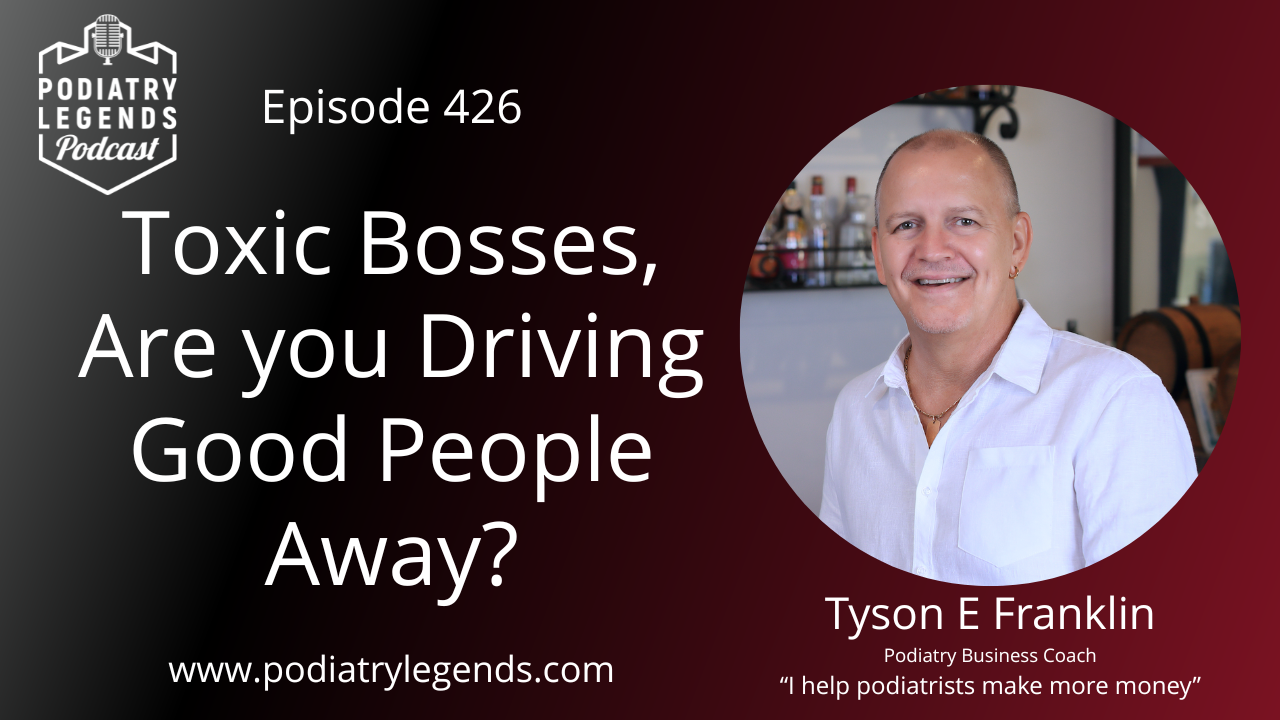
When I graduated as a podiatrist, I knew how to assess patients, diagnose foot problems and provide treatment. What I wasn’t taught was how to lead a team.
Yet, for many of us who own practices, leadership becomes one of the most important skills we’ll ever need.
In this episode, I explore why good podiatrists can sometimes become poor leaders without even realising it. Most practice owners don’t intentionally become toxic bosses. More often than not, the daily pressures of running a business slowly influence how we communicate, make decisions, and interact with our team.
What Actually Makes a Boss Toxic?
There’s a big difference between having high standards and creating a toxic workplace.
Holding people accountable, setting expectations and having difficult conversations are all part of being a good leader. Toxic leadership, however, shows itself through behaviours such as constant criticism, micromanagement, poor communication, playing favourites, taking credit for success, and refusing to accept responsibility when things go wrong.
I discuss how these behaviours often develop gradually rather than overnight.
Why Good People Become Bad Bosses
One of the biggest points I make in this episode is that most toxic bosses don’t start out that way.
Stress, financial pressure, staff shortages, difficult patients, and the demands of running a busy clinic can cause even well-intentioned leaders to become reactive rather than intentional.
I also talk about the danger of repeating leadership habits we experienced ourselves. Without taking time to reflect, many practice owners unknowingly become the type of boss they once promised they’d never be.
The Hidden Cost of Poor Leadership
Poor leadership doesn’t just affect your team. It affects your entire business.
Long before an employee hands in their resignation, they often disengage emotionally. They stop contributing ideas, lose enthusiasm and simply do the minimum required.
High staff turnover costs far more than recruiting a replacement. It impacts workplace culture, patient experience, productivity and your reputation as an employer.
Patients notice when a team enjoys coming to work, and when they don’t.
One Question That Could Change Everything
“Would I want to work for me?”
It’s not always an easy question to answer, but it may be one of the most valuable questions any business owner can ask.
Leadership isn’t about being perfect. It’s about continually improving and creating an environment where people feel respected, supported and motivated to do their best work.
In This Episode You’ll Learn
- Why good practice owners sometimes become poor leaders.
- The difference between being demanding and being toxic.
- How stress quietly changes leadership behaviour.
- Why staff often leave emotionally before they resign.
- The true financial cost of poor workplace culture.
- Five practical ways to become a better boss.
- How to build a clinic where people genuinely enjoy coming to work.
If you’ve ever managed a team, currently employ staff or hope to own a podiatry practice one day, I think this episode will encourage you to reflect on your leadership style and inspire you to become the type of boss people are proud to work with.
If you enjoyed this podcast, please share it with your podiatry friends.
Do you want to make more money in podiatry?
If you want to make more money from your podiatry business and have more time off with your family, please visit my website at tysonfranklin.com to learn how I can help you make this a reality. Otherwise, feel free to email me any questions you may have about your business at tf@tysonfranklin.com.